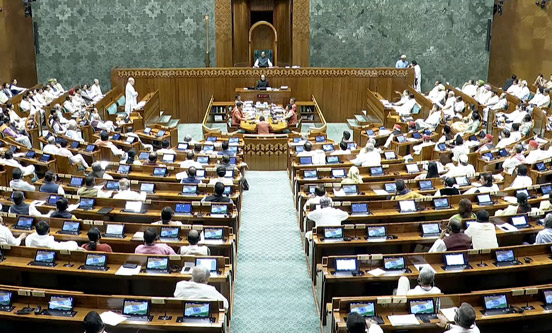
New Delhi: The Parliament approved the Waqf (Amendment) Bill, 2025, in the early hours of April 4 (IST) after a lengthy and intense discussion, which saw the Bill getting the nod in the Upper House by a majority of 128 votes against 95 — just a day after it was passed in the Lower House following a marathon debate that continued for almost 12 hours.
A day after Union Home Minister Amit Shah and Parliamentary Affairs Minister Kiren Rijiju made a strong case for the Waqf (Amendment) Bill in the lower house of the Parliament, or Lok Sabha, Leader of Rajya Sabha, or Upper House, and Union Minister J P Nadda led a passionate debate in the Rajya Sabha on the bill.
The debate that began on April 3 ended with the majority of members voting for the Bill the next day. It will now be sent to President Droupadi Murmu for her assent to become law. Speaking in the Upper House Nadda stressed the urgent need for reform to protect national interests and prevent the misuse of Waqf properties, which should serve the welfare of poor Muslims.

(Graphic courtesy: X@BJP4India)
Nadda asserted that democracy thrives on meaningful discourse and the inclusion of diverse perspectives, rather than simply accepting a single viewpoint. He urged members to prioritize the nation’s welfare over party interests, asserting that the Bill is fundamentally in the country's interest.
He stated that the Waqf Amendment Bill seeks to rectify this by empowering district collectors to determine rightful ownership of properties and explicitly excluding lands under the Archaeological Survey of India (ASI) from Waqf claims. This, he noted, was a pivotal reform.
Waqf, in Islamic law, refers to a charitable endowment where an individual dedicates property for religious or philanthropic purposes. Once designated as waqf, the property cannot be transferred through inheritance, sold or given away. The government asserts that amendments to the bill aim to combat corruption, rectify mismanagement, and foster inclusivity.