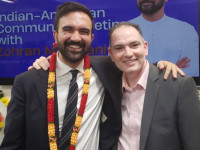
By Dr. Kumar Mahabir & Shalima Mohammed
This webinar was a collaboration among the Indo-Caribbean Cultural Centre (ICC), Utrecht University, and the Cultural Heritage Agency of the Netherlands. It was part of a project titled “Diaspora Heritage in Motion” led by Dr. Jaswina Elahi. The project explores the transnational dimensions of heritage, looking at how postcolonial diasporic communities preserve, interpret, share and transform their cultural heritage through time and space. In the webinar, the focus was on cultural heritage, memory and identity among the descendants of indentured girmitiya labourers across the diaspora.
The following are excerpts from an Indo-Caribbean Cultural Centre (ICC) Thought Leaders’ Forum (26/10/2025). The ZOOM program was chaired by Shakira Mohommed and moderated by Shalima Mohammed, both from Trinidad. There were (5) speakers in the program. The topic was “Culture, Heritage and Identity in the Girmitya Diaspora.” See the unedited recording of the program: https://www.youtube.com/@dmahab/streams.
.jpg)
ARI GAUTIER said: “A new generation of girmitya [indentured] diasporic people are reclaiming the parai tradition. They travel to India, especially South India, to learn how to play and make the parai. When they return, they bring this knowledge back with them. Over the past 10 to 15 years, there has been a new renaissance of parai music in Mauritius, where it is once again performed in temples and at various ceremonies. The cultural heritage that the girmityas carried with them has been transformed and creolized over time. The musical and cultural roles established across the Tamil diaspora have merged with Creole forms. Apart from Maloya, the parai continues to contribute more to ritual and devotional contexts than to mainstream music or commercial recordings. This hybridization demonstrates how Tamil communities across the ocean have preserved the ancestral rhythms of the parai while simultaneously creating new diasporic musical languages rooted in cross-cultural solidarity.”
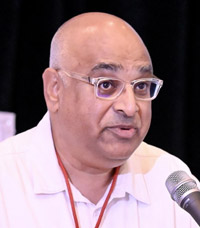
PROFESSOR ‘CHATS’ DEVROOP said: “There are six key lessons for understanding diaspora music and cultural survival. 1. Music as cultural life. Music preserves language, culture, religion, and collective identity when other connections are severed. It is not just entertainment; it is survival. 2. Creativity under constraint. Severe limitations can spark extraordinary creativity and innovation when communities are determined to survive; constraint becomes a catalyst for creativity. 3. Adaptation as innovation. Hybridity reflects reality and becomes a strength, not a weakness. The hybrid music that emerged was not inferior to pure Indian music. It was something valuable in its own right. 4. Community space is essential. Physical and social spaces where traditions can be practiced and transmitted are crucial. Without such spaces, preservation becomes nearly impossible. 5. Centre lived experiences. The voices of practitioners matter most. Academic analysis must be grounded in lived experiences. Listen to those who carried the traditions. 6. Heritage is living. Tradition must evolve to survive. Cultural preservation does not mean freezing it in time; it means conscious evolution with community support.
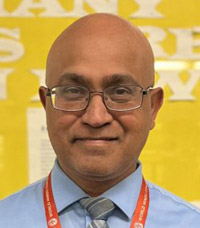
DR. VISHNU BISRAM said: “Resilience, creativity and adaptability have led to cultural preservation and persistence of Indian culture in not only Guyana, but in Trinidad and Suriname and in the diaspora largely. Generally, people think of culture as singing, dancing and music but culture is more than that. It is a total way of life of a group of people. It includes their habits, their traditions, clothing, music, language, songs, food, arts, decorations, architecture, how they pray, their homes, their places of worship and beliefs, their rituals, their practices, shopping, melodies, celebrations, including of festivals such as Eid, Phagwa, Diwali, the milieu of rites of passage and anniversaries, artifacts, charitable networks, among other aspects of life. These varied aspects of life are a testament to the Indian community's commitment to preserving their identity and roots.”

PROFESSOR PETER MANUEL said “My focus of study has been on traditional musical forms and how they have evolved in the diaspora, similar to Trinidadian local classical music or tassa drumming, which blend old and new influences into vibrant contemporary styles. I have travelled to the Bhojpuri region in India to trace the roots of these traditions and understand what was preserved, transformed, or creolized in the diaspora. In the case of Suriname, its closest cultural and geographic ties are with Guyana and Trinidad, countries that share aspects of what I describe as ‘isolated diaspora cultures,’ shaped by the end of the indentureship period.”
DR. JASWINA ELAHI said. “I would not say traditional Hindi songs are disappearing. Young people are drawn to chutney and remix music, especially with the growing influence of Trinidadian musical styles. For example, bhaitak ghana - once a very traditional form - has been heavily influenced by chutney music. Although some young people can still sing in Bhojpuri or other dialects, many prefer English or Trinidadian Creole, which has contributed to the decline of traditional bhaitak gana. At the same time, there is a kind of revival of ‘our own music,’ though it has changed significantly under diasporic influences.”
(Photos courtesy: Dr Kumar Mahabir)
(Correspondence – Dr. Kumar Mahabir, Trinidad and Tobago, Caribbean. WhatsApp +1 868 756 4961. E-mail: [email protected])
(The views expressed are not necessarily of The South Asian Times)