By John Di Leonardo
In Minneapolis, a sweeping federal immigration crackdown has become one of the most troubling civil-rights flashpoints of early 2026. Under Operation Metro Surge, which the Department of Homeland Security has described as its largest immigration operation ever, thousands of ICE and Homeland Security agents have been deployed across Minnesota. For immigrant communities, including many South Asians, the surge has created fear, instability, and the sense that everyday life itself has become increasingly unsafe.
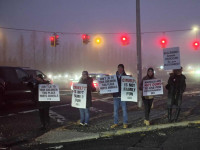
That fear became tragically real on January 7, when an ICE agent shot and killed 37-year-old Renée Good in south Minneapolis during a federal operation. Authorities quickly claimed the killing was an act of self-defense, but eyewitness accounts and community leaders have strongly disputed that narrative. Protests erupted across Minneapolis and beyond, reflecting widespread concern over why immigration enforcement has escalated into lethal force on residential streets.
Days later, another ICE agent shot a Venezuelan man in the leg during a separate encounter. Once again, federal officials justified the use of force, while family members and advocates questioned both the necessity of violence and the lack of transparency. Taken together, these incidents have intensified public scrutiny of ICE and raised profound questions about whose lives are protected and whose are treated as expendable.
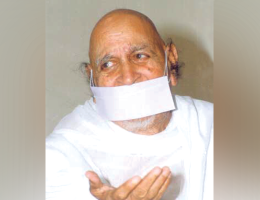
These events demand a moral response. One such framework comes from the Jain principle of Anuvrat, deeply rooted in South Asian spiritual tradition. Anuvrat calls on individuals to take small, voluntary vows grounded in ahimsa, or non-harm, guiding daily choices with restraint, empathy, and responsibility toward all living beings.
This ethic aligns with the legacy of Dr. Martin Luther King, Jr., whose leadership was grounded in nonviolence not merely as a strategy, but as a way of life. King rejected the idea that justice could be achieved through fear or domination, insisting instead on dignity, love, and respect for every human being, especially those targeted by unjust systems.
That vision was later extended by Coretta Scott King and their son, Dexter Scott King, who explicitly linked nonviolence to veganism and animal rights. Coretta described veganism as “the next logical extension of Martin Luther King, Jr.’s philosophy of non-violence.” Dexter observed, “If you’re violent to yourself by putting things into your body that violate its spirit, it will be difficult not to perpetuate that onto someone else.” For them, justice was indivisible, extending from human relationships to animals and the Earth.
Applied to Minneapolis, these traditions challenge us to confront immigration policies that rely on fear and force rather than compassion. Anuvrat urges us to question systems that normalize harm while eroding dignity. King’s legacy reminds us that nonviolence is not passive, but a courageous moral stance.
The grief of Renée Good’s family and the anxiety gripping immigrant communities demand more than political debate. They demand conscience. I invite readers to consider making an Anuvrat of their own — a small vow to protect neighbors, whether immigrants seeking safety, animals whose suffering is unseen, or anyone pushed to society’s margins. Such commitments honor Dr. King’s legacy and affirm that justice begins with compassion.
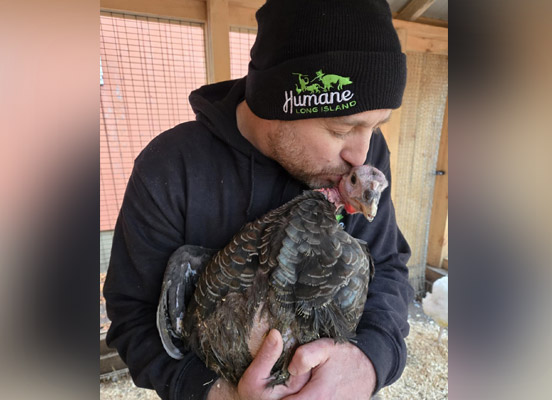
John Di Leonardo is the founding director of Humane Long Island. He was previously the Senior Manager of Grassroots Campaigns and Animals in Entertainment Campaigns for People for the Ethical Treatment of Animals (PETA). He has a Master's degree in Anthrozoology from Canisius College. He also earned a graduate certificate in Jain Studies from the International School of Jain Studies (ISJS) in India. John can be reached at [email protected].