Washington: If you’re diagnosed with breast cancer, what should you eat to ensure the best prognosis? In APL Bioengineering, by AIP Publishing, a multidisciplinary team of researchers at Princeton University conducted a study to find out.
“We took the approach of building identical engineered tumors and culturing them in conditions that mimic the blood composition of patients under different dietary states,” author Celeste M. Nelson said. “We were hoping to identify dietary conditions that would slow tumor growth. Instead, we found one dietary condition — a high-fat diet — that sped up tumor growth.”
The researchers engineered a tumor model using a human plasmalike medium to re-create a more realistic microenvironment around tumors. This allowed them to replicate the biochemical effects of nutrients from food. As a result, they could isolate specific nutrients and their effects and closely examine the metabolic reprogramming that occurs in cancer cells.
Their study focused on triple-negative breast cancer, a subtype that is particularly difficult to treat with standard methods. They carefully examined the structure, growth, and spread of cancer cells and how these characteristics differ in four different dietary conditions that can occur in a human body: high-insulin, high-glucose, high-ketone, and high-fat.
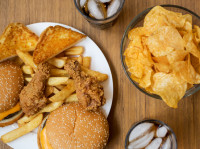
They discovered a high-fat diet accelerates tumor growth and invasion. They also found it causes an increase in the enzyme MMP1, which degrades the extracellular matrix, and is associated with a poor prognosis. Using their results, the researchers will be able to apply their method to other breast cancer subtypes and scenarios.
The researchers plan to use their results to further examine the complex interplay between dietary conditions and various tumor therapies.