By Bhuvan Lall
The globally recognized hero deserves to be celebrated in our nation’s official record of events of the Indian freedom struggle.
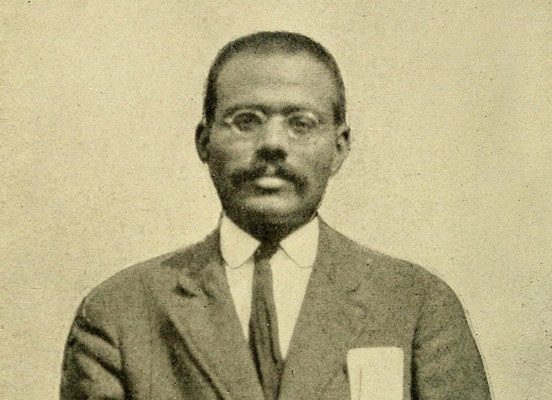
On the cold winter night of March 4, 1939, Har Dayal died in Philadelphia, far from the country whose freedom he had imagined in such vivid, uncompromising terms. He did not live to see it come, nor the cosmopolitan world he had sketched in his speeches and writings. He was just 54. Three days later, his obituary appeared in The New York Times. After his sudden departure, all that remained was a name that once carried weight, now half-forgotten, a trail of achievements, impressive yet somehow diminished by time. The world never got to know that before Bose became a national hero, much before Nehru entered public life, and even before Mahatma Gandhi returned to India from South Africa, there was once a Har Dayal.
In the early years of the twentieth century, no Indian commanded quite so much attention in Europe and North America for sheer intellectual force as Har Dayal. He was fluent in seventeen languages, and his mind held facts as a library holds books, precise and unsparing. His oratory could still a room; even a schoolboy at Harrow, Jawaharlal Nehru, felt the pull of it.
He took first division in his MA when few did; he resigned an Oxford scholarship he had won with difficulty; he lectured at Stanford, the first Indian to do so in an American university; he demanded citizenship for Indians in America when the word itself seemed foreign; he brought Marx to India before others thought to; he wrote books published in Britain when that was still a rarity for an Indian. His writing was prodigious: five books, among them a study of Buddhism that required him to master the Pali language, then to render texts into Sanskrit for a thesis in English that earned him a doctorate from London.
.jpg)
Bhuvan Lall with a copy of his book on Har Dayal at Stanford University. (Photo courtesy of the author)
The labor was solitary, exacting, as though knowledge itself were a form of resistance. All accounts suggest he was a smarter and more well-read person than anyone else of his era, and his extensive writings and life’s work prove that gift. Yet, as a young man, he walked away from the security and position in the Indian Civil Service to take up the uncertain fight for freedom.
Har Dayal founded the Ghadr Party in California in 1913, a movement that stretched across oceans, serious in its intent, global in its reach. He stood for rights where others wavered, opposed wrongs without qualification. It was a choice that echoed through the years, inspiring others who came after, though they seldom matched its clarity. And with a kind of detached audacity, he planned an invasion of Britain itself, the only Indian revolutionary to entertain such a scheme.
His presence, always courteous, always smiling, commanded respect naturally. Portraits of him hung in homes for admiration; children bore his name; scholars measured themselves against his record, and intellectuals devoured his writings. To millions, he was simply the Great Indian Genius - Har Dayal.
The British authorities recognized the colossal power of his mind, feared him enough to exile him from India, to sever him from family, to erase him from the press. Agents were sent, including writers such as Somerset Maugham, with orders amounting to a license to silence. This effort to arrest the tsunami unleashed by Har Dayal made the creation of MI6 possible.
He eluded them all, his mind always a step ahead, untouched. British reports described him as the most brilliant man India had produced, the most dangerous revolutionary they had faced, and the most decent human one could meet on Earth. Over time, fictional versions of him appeared in novels; a film inspired by his life was released by Paramount in 1922. History absorbed him into myth.
On April 13, 1915, Gandhi arrived at St Stephen’s College in Delhi, fresh from South Africa. Principal Sushil Rudhra and Reverend Charles Andrews, both admirers of Har Dayal, spoke of the former student whose mind had dazzled Californian intellectuals and who had pioneered the concepts of political missionaries and civil disobedience in India. Time went by.
The generation that had known Har Dayal’s eloquence, his evolving thought, passed away. Triumphs once celebrated grew dim; his story yielded place to others who traveled similar paths, borrowed ideas, and gathered greater fame. The phenomenon itself faded, replaced by longer narratives that claimed the ground he had cleared.
Once recognized in the West as ‘the greatest man of India’ and praised by The New York Times in 1919, as “not only the brainiest man… but also the most cultured”, Har Dayal stayed anonymous and was omitted from history books. Many Indians remember their grandfathers being named after him because their great-grandfathers believed he was far more significant to India than many other known figures.
To revisit Har Dayal now is to confront a life of unusual intensity, a mind that refused easy accommodation. One sees the cost of such refusal, the isolation, the exile, the slow erasure from a nation’s history, and yet the persistence of the example. His genius, precise and unyielding, still demands recognition, even though the world has moved on and created other heroes.
Har Dayal’s spiritual, academic, and revolutionary work, which began in his undergraduate years at St Stephen’s in Delhi, is now acknowledged worldwide. Oxford has retained Har Dayal’s reflections during University debates in 1906-7, and St Johns celebrated the life of their famous former student in 2021. Stanford University has preserved Professor Har Dayal’s memory through letters from 1912-14.
His name appears in the history books of Palo Alto, and his humble one-room apartment at 347 Ramona Street is now listed as a historic property that has stood the test of time since 1893. The University of California at Berkeley has dedicated a section of its archives and history section to the Ghadr patriots, including Har Dayal, and there exists a small memorial to Har Dayal’s association with the village of Kinnastrom in a remote corner of Sweden. Har Dayal’s image also appears in the Ghadr Museum in San Francisco and the Jallianwala Bagh Museum in Amritsar. And in the city of his birth, there are public libraries named after Har Dayal; he appears in the book on the history of St Stephen’s College; and a DDA District Park was dedicated to the memory of the Great Indian Genius in 2022.
A lot more needs to be done in India. The man who never forgot anything he read must not be a forgotten footnote in his motherland. Colleges, institutions, neighborhoods, and streets must be named after this mind-blowing gentleman-revolutionary across India.
A man so accomplished as Har Dayal must not find his life’s work in the dustbin of history. This globally recognized hero deserves to be celebrated in our nation’s official record of events of the Indian freedom struggle. As we reexamine Har Dayal’s life and legacy, we are reminded of the profound impact one person can have on the world. His extraordinary journey continues to inspire us to strive for positive change and to believe in the potential for a brighter future.
The genius of Dr Har Dayal deserves lasting fame.
(Bhuvan Lall is the biographer of Subhas Bose, Har Dayal, and Vallabhbhai Patel. He is also the author of Namaste Cannes and India on the World Stage. He can be reached at [email protected])