By Mohit Anand, Anirban Som & Rajesh Mehta
India’s aviation market is large enough to accommodate new players, but it is unforgiving of missteps.
Three new carriers are planning to enter India’s civil aviation sector, with the government recently granting preliminary approvals to a new set of private airlines. The entry of Shankh Air, Al Hind Air, and FlyExpress signals continued confidence in long-term passenger demand and the promise of deeper regional connectivity.
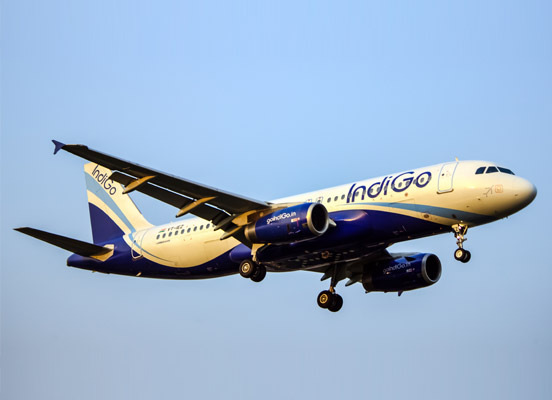
The new entrants have outlined ambitions that are reminiscent of earlier growth cycles - serving underserved cities, enhancing regional connectivity, and competing aggressively on fares. These strategic intents are commercially sound. However, the recent operational disruption at IndiGo underscores a stark reminder: ambition alone does not build a sustainable airline. We outline the key learnings from Indigo’s debacle for these airlines.
Why the IndiGo episode matters to new entrants
The IndiGo episode should not be dismissed as an isolated lapse by a market leader but understood as a systemic warning. The crisis was not triggered by a single shock; it reflected a deeper misalignment between growth ambitions, scheduling practices, workforce planning, and regulatory enforcement. When stricter ‘Flight Duty Time Limitation’ norms collided with aggressive rostering and thin crew reserves, the operational fabric unravelled with alarming speed.
Similar tensions between ambition and preparedness resulted in the collapse of Air Deccan, Air Sahara, and Jet Airways, all of which expanded faster than their organizational and financial foundations could support. As the new carriers transition from regulatory approvals to aircraft induction and route launches, their ability to internalise these lessons will determine whether they emerge as credible long-term competitors or repeat a cycle of disruption that India’s aviation ecosystem can no longer afford.
Growth without buffers is a fragile strategy
The first lesson lies in conservative capacity planning. IndiGo’s experience illustrates the risk of expanding schedules aggressively without adequate reserves of trained cockpit crew. Aircraft can be acquired swiftly through lease or purchase; pilots cannot. Training, certification, and experience accumulation take time. The new entrants' fleet induction must be carefully synchronized with—if not preceded by investments in recruitment, simulator access, and robust training pipelines. The temptation to announce new routes early must be resisted unless the manpower to sustain them already exists. In aviation, excess capacity in people is not inefficiency; it is insurance against disruption.
This discipline is especially critical under the Ministry of Civil Aviation’s regional connectivity schemes, such as UDAN, where ambitions to expand an airline’s presence beyond metro cities can outpace the availability of adequately trained crew and ground infrastructure.
Regulations must shape planning, not follow it
Equally critical is the integration of regulatory foresight into operational planning. The Directorate General of Civil Aviation's (DGCA) tighter enforcement of duty and rest norms was neither abrupt nor unforeseen. Yet the industry’s reaction exposed a persistent tendency to treat regulation as a mere compliance exercise rather than a strategic determinant. For new entrants, scenario planning around regulatory shifts must become routine.
Rostering models must be stress-tested not only for ideal conditions, but also for sudden rule changes, seasonal demand surges, and attrition shocks. Regulatory decisions that impact operational flexibility—such as limited slot availability at airports in congested metro cities and compact air traffic management controls—can restructure route economics by increasing turnaround times and fuel consumption, therefore diminishing scheduling reliability. Building plans on the best-case regulatory assumptions leaves airlines dangerously vulnerable; resilience lies in preparing for the tougher scenarios before they arrive.
The real bottleneck: pilots, not aircraft
Pilot recruitment and retention deserve urgent attention. India already faces a constrained supply of experienced commanders, a shortage intensified by global demand. Upcoming carriers cannot assume that hiring will remain seamless or inexpensive. Competitive pay structures, transparent career progression, and humane scheduling practices are not simply employee perks; they are essential operational safeguards. An airline that stretches its crew to maximise aircraft utilization may secure short-term cost advantages, but it risks long-term instability and reputational damage. In aviation, the true constraint is not the availability of aircraft, but the people qualified to fly them. In fact, this constraint also limits the effectiveness of rapid regional expansion under schemes such as UDAN.
When disruption hits, communication becomes critical
The IndiGo episode revealed not only operational fragility but also shortcomings in customer communication and crisis management. While the airline eventually offered refunds, waivers, and accommodation support, the initial confusion amplified passenger frustration and eroded trust. For new entrants seeking to build credibility, the margin for error is even narrower. Automated refund systems, pre-negotiated hotel partnerships, and empowered customer service teams must be embedded into operations from day one. In an era of real-time social media amplification, silence or ambiguity can inflict more damage than the disruption itself.
Regulatory scrutiny is swift and public
A further lesson lies in governance and regulatory engagement. When large-scale cancellations occur, government intervention is swift and highly visible. IndiGo faced fare caps, capacity restrictions, and close monitoring. New airlines must anticipate this reality and maintain meticulous documentation of compliance efforts. Dedicated internal teams should be equipped to engage regulators with transparency and respond through data rather than defensiveness. Cooperation may not eliminate scrutiny, but it can meaningfully shape outcomes when crises arise because in a market dominated by a few large carriers such as IndiGo and Air India, disruptions quickly generate system-wide ripple effects, which turn the focus of regulators to not only the errant carriers but to the entire system as a whole.
The hidden cost of operational failure
Financial resilience is often overlooked in the rush to launch. Disruptions impose immediate costs—refunds, rebooking, crew repositioning, passenger accommodation, and legal exposure—that can quickly strain balance sheets. These financial shocks are compounded by structural cost pressures such as high taxation on Air Turbine Fuel and the depreciation of the rupee, which significantly inflates operating costs in the Indian aviation market relative to competing airline hubs in Southeast Asia and the Gulf. In such a cost environment, even short-lived disruptions can lead to major financial stress for airlines. This partly explains why a large number of foreign airlines prefer not to operate major operational bases from India despite strong demand growth.
New entrants should ring-fence contingency liquidity and ensure that investor expectations are aligned with conservative cash management. In aviation, the cost of survival during disruption is routinely underestimated.
Building airlines for endurance, not just expansion
India’s aviation market is large enough to accommodate new players, but it is unforgiving of missteps. The IndiGo crisis offered the industry a rare, high-visibility reminder of how quickly ambition can outpace preparedness. The entry of new private airlines coincides with a period of both expansion and heightened scrutiny. For new carriers, the imperative is not to shun growth, but to sequence it with discipline. As India works to deepen connectivity and strengthen its aviation ecosystem, the success of these new entrants will depend less on how quickly they take off and more on how well they are prepared for turbulence. In aviation, credibility is built not during smooth flights, but in how airlines anticipate, withstand, and recover from disruption both on air and on ground.
----------------------------------



(Mohit Anand is Professor of International Business and Strategy at emlyon business school (France), Anirban Som is an Associate Professor of Marketing at the Indian Institute of Management Tiruchirappalli, and Rajesh Mehta is an International Affairs expert working on innovation & public policy)
The views expressed are not necessarily those of The South Asian Times