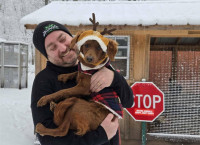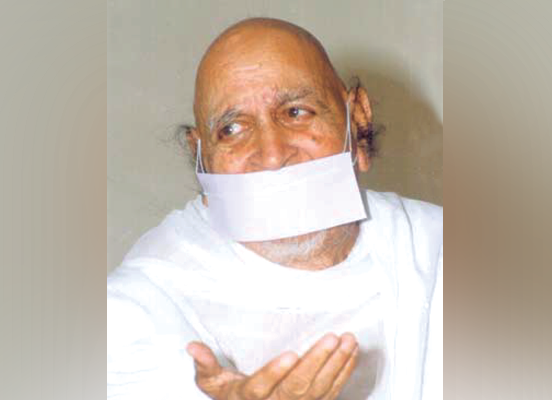
By John Di Leonardo
If we are serious about living by the principles of Anuvrat—nonviolence, restraint, and compassion—then we must be honest about the violence we tolerate in our own communities. In New York, often celebrated as a progressive and enlightened city, live animal slaughter markets operate in plain sight.
A recent undercover investigation by Animal Outlook pulled back the curtain on these facilities, documenting what can only be described as systemic cruelty. Chickens, ducks, and rabbits are crammed into filthy, overcrowded cages, many of them sick, injured, or dying. Some are left without food or water. Others are handled like inanimate objects—grabbed, thrown, and discarded as if their suffering doesn’t matter.
Hidden camera footage shows birds having their throats slit while still conscious, flapping and struggling as they bleed out. There is no meaningful effort to reduce suffering. No respect for life. Just speed, profit, and indifference.
And it’s not just an animal welfare issue—it’s a public health concern. Evidence gathered by the Humane Society of New York through Freedom of Information Act requests and reviewed by Animal Outlook reveals state regulators cited the City’s live markets for more than 2,000 violations between 2022 and 2025: blood and feces on floors, improper waste disposal, and animals of different species packed together in conditions ripe for disease transmission. As I told the Daily Mail last week, “There were at least eight outbreaks of highly pathogenic avian influenza in the New York City live slaughter markets just last month. These factory farms that supply live markets are like petri dishes for killer diseases. They’re rapidly evolving, and then we’re bringing them into the most populated cities in the world.”
What’s perhaps most important to understand is that the animals in these live markets do not come from some separate system. They come from the very same factory farms that supply the neatly packaged bodies sold in grocery stores. The suffering may look different—hidden behind plastic wrap instead of visible in cages—but it is part of the same violent pipeline. Whether we buy flesh from a supermarket or watch an animal killed in a live market, we are participating in the same system of exploitation.
Anuvrat doesn’t demand perfection; it asks for conscious effort. It asks us to examine the consequences of our choices and to reduce harm wherever possible. That starts with what we eat, what we support, and what we’re willing to look away from. Supporting a system that treats living beings as disposable commodities is incompatible with a commitment to nonviolence.
So I invite you to make a small vow, or Anuvrat, to refrain from eating animals or their products. This is not about sacrifice; it’s about alignment. It’s about living in accordance with the values we claim to hold. Each meal is an opportunity to practice nonviolence, to withdraw support from cruelty, and to affirm that every life has value.
We don’t need to wait for sweeping policy changes to act. We can choose plant-based foods. We can support legislation that phases out live slaughter markets. We can speak up, educate others, and refuse to normalize cruelty. These are small vows—but as Anuvrat teaches, small vows lead to big change.
If you’d like to connect with the individuals behind these statistics, I welcome you to reach out at [email protected]. At Humane Long Island, we’re currently caring for dozens of rescued animals, including three rabbits, two turkeys, and a duck who narrowly escaped New York City’s live slaughter markets. Their stories are not abstract—they are living reminders of why our choices matter, and how compassion can turn the tide.
----------------------------------------------------------
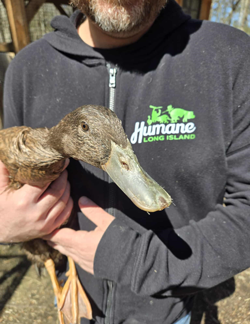
John Di Leonardo is the founding director of Humane Long Island. He was previously the Senior Manager of Grassroots Campaigns and Animals in Entertainment Campaigns for People for the Ethical Treatment of Animals (PETA). He has a Master's degree in Anthrozoology from Canisius College. He also earned a graduate certificate in Jain Studies from the International School of Jain Studies (ISJS) in India. John can be reached at [email protected]. (Photo courtesy: John Di Leonardo)